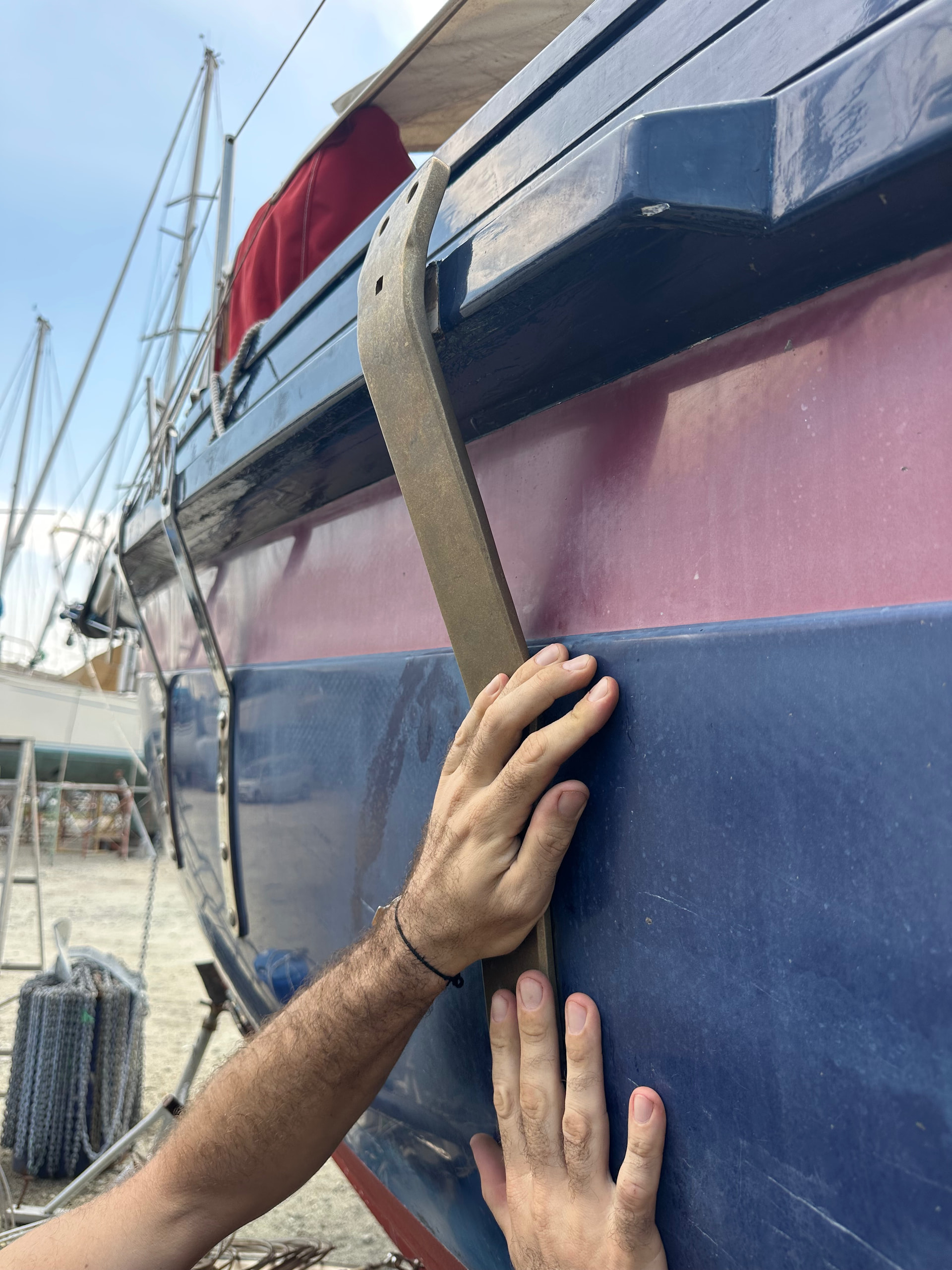
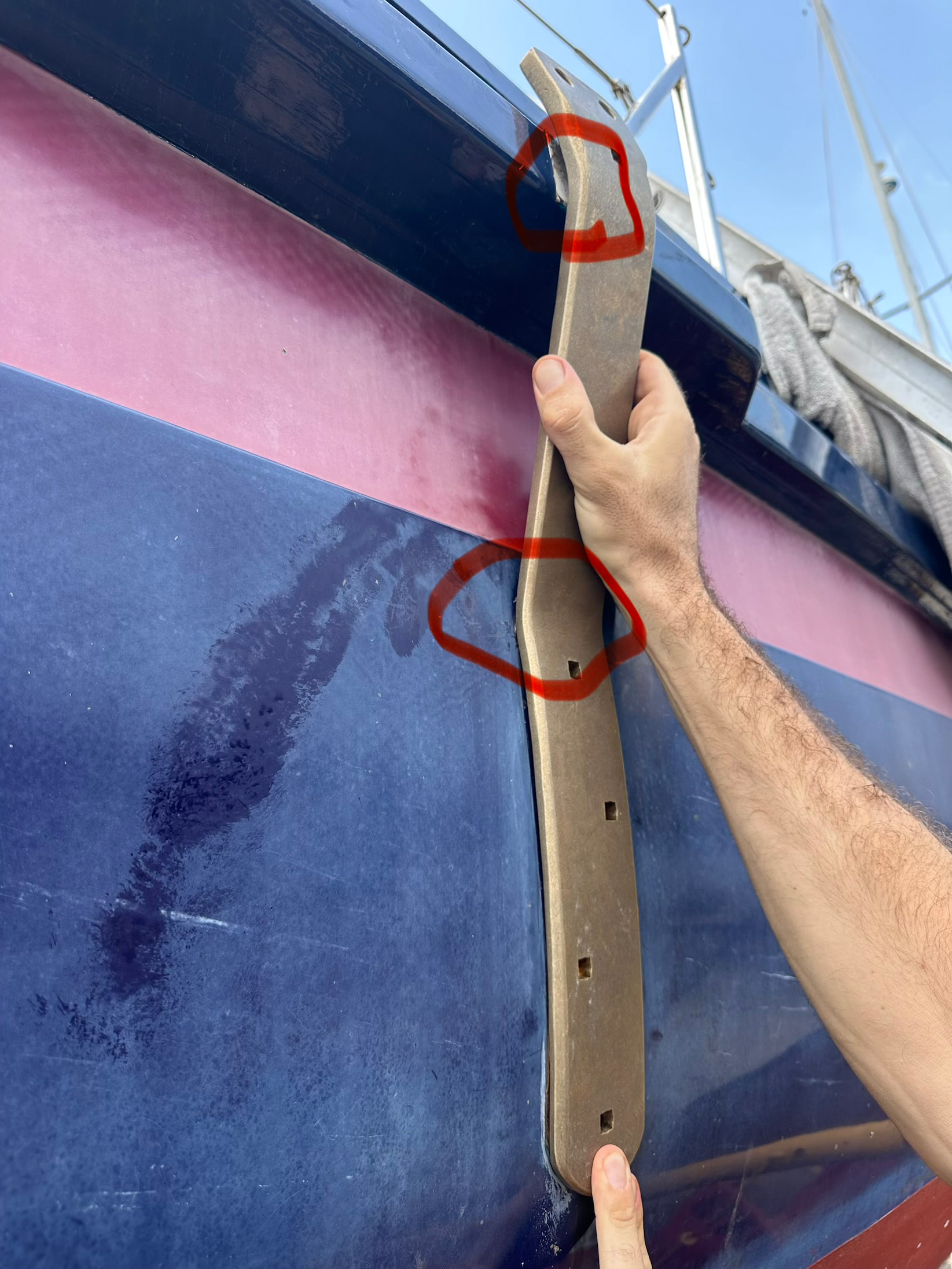
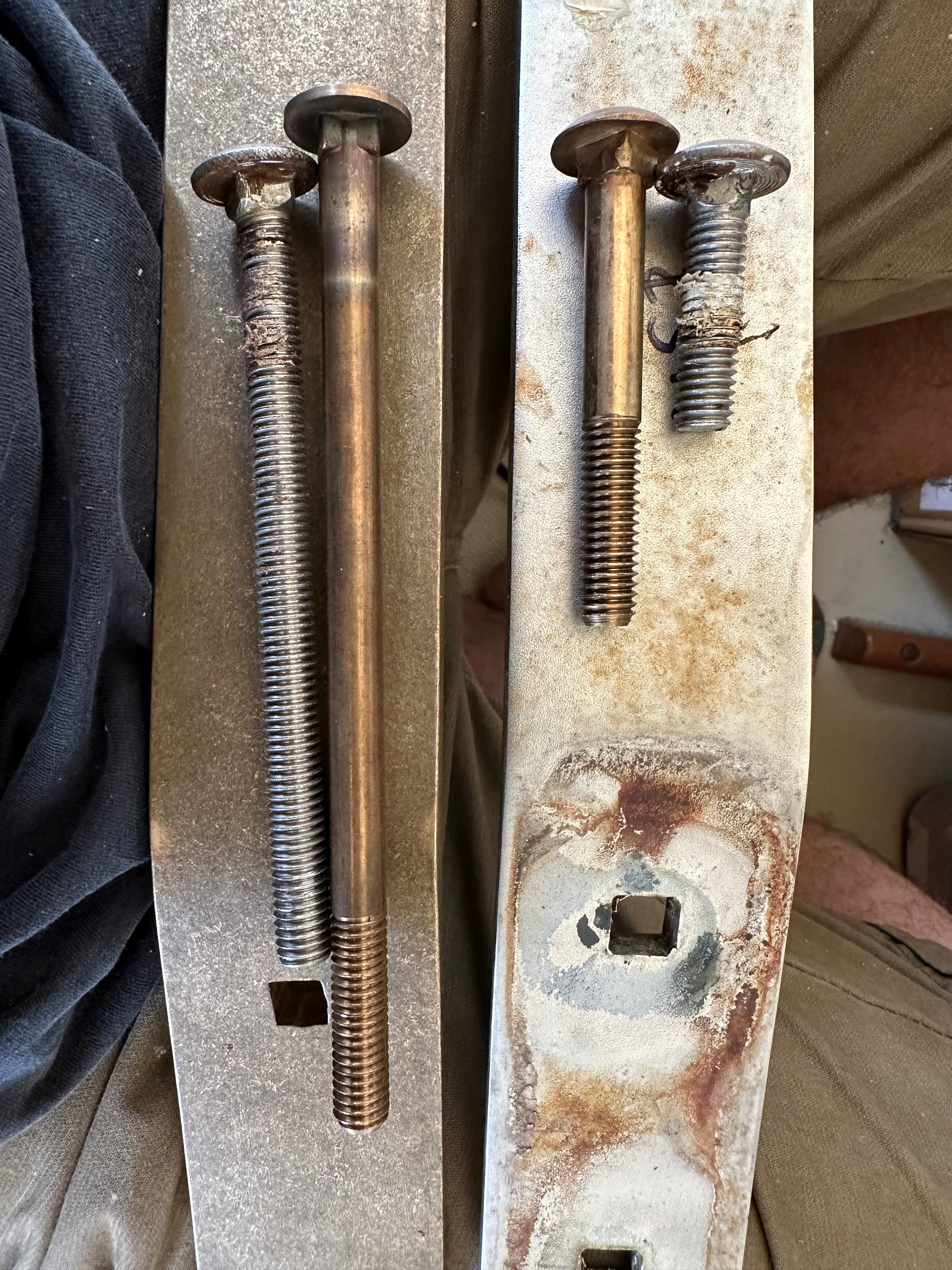
Replacement BCC Chainplates

Hello All,

Nica and I are going to be working on bcc-mischief this summer - getting her back into sailing shape hopefully in time for Winter in the Bahamas 2023/2024. We have an ambitious list of projects, including inspecting the chainplates with the likelihood that we just replace them all. I believe she has the original 1983 SS 316 chainplates installed.

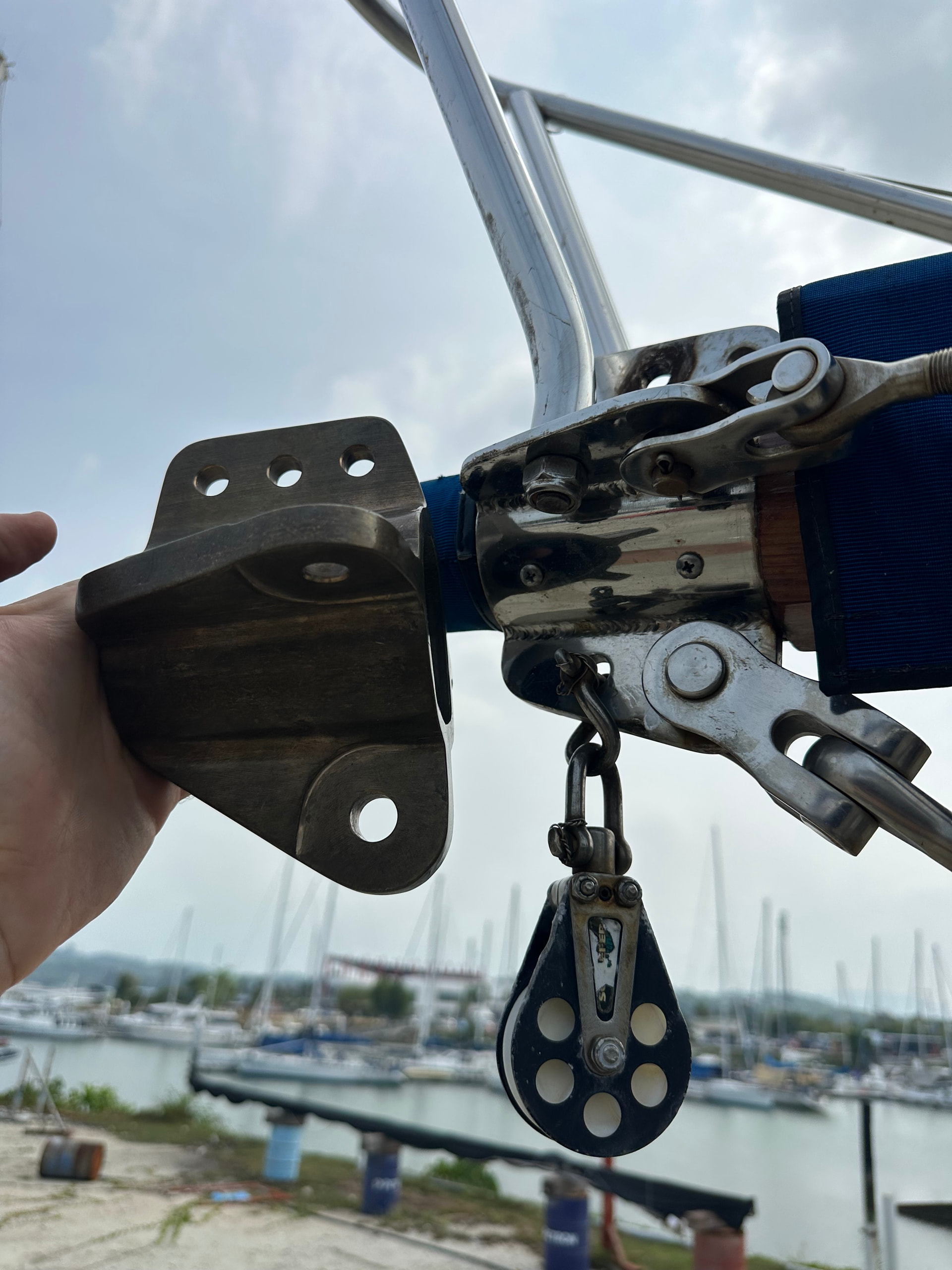
Todd (Cape George) uses bronze chainplates produced by PTF. That might be out of my league budget wise.

@Bil has several posts detailing his approach to replacing chainplates on BCC Zygote. Bil chose ā€œduplexā€ 2507 stainless steel for its superior resistance to pitting and crevice corrosion - compared to say 316. Bil also had a shop laser cut the parts from cad files - which I think is interesting as well.

Bill has lots of posts on this topic - here are just a couple:

I’m contemplating working with a local SS fabricator - which would probably result in new SS 316 fittings modeled after the originals. Good for another 20 years I guess…

Or, working with Colligo Marine to get titanium chainplates fabricated. Has anyone gone down this titanium rabbit hole? Worked with Colligo on the project? How did cost estimates compare - titanium vs SS vs bronze?

@MCilenti, you had once upon a time mentioned that you were considering titanium chainplates. How did that go?

Cheers,
Jeremy

I believe a complete set is $1754. If you have a factory boat its highly unlikely you will need to replace.

Hi @barefootnavigator. bcc-mischief is a SLM-finished 1983 boat.

Can you provide some additional context around that $1754 figure? Is that Colligo titanium? PTF bronze? Or a local SS fabricator’s quote for SS316? Or something else?

@Adventure , a 1987 boat, reported a failed chainplate here:

The folklore I hear is that SS316 chainplates generally have a 20 year service life. But you can dye test them under a magnifying loup to determine when they are truly ā€œdoneā€. I have not done this with Mischief yet. I don’t think there are any absolute/reliable answers here other than understanding that the service life is finite.

Cheers,
Jeremy

Sorry, Its a quote I got This year from PTF for all 6 Chainplates. I’m replacing everything on my boat with new bronze. If you go this route beware of the proper measurements for holes. I am in no way shape or form an expert on this…

1 Like

Ahoy Jeremy! Apologies for the delay in my reply.

We have not made a decision about which way we’ll go yet, but I’m leaning towards bronze but I like both bronze and titanium above SS. In addition to not having any crevice corrosion issues (and therefore way outlasting me), the modulus of elasticity for both is lower than stainless. It probably doesn’t matter, but my thought is that in any extreme event (knockdown, etc.) the chain plates can stretch more and theoretically that should help reduce stress on the rest of the rig, possibly preventing the rig from coming down.
It seems there are a fair number of custom titanium manufacturers available, which should make that relatively easy (especially if you just send them all the old hardware). For bronze, I’d probably go through Todd to get a full set from PTF. I tried getting a replacement windlass handle direct from PTF and found them very unresponsive, but I suspect Todd would have good luck. Of course, you could send in the old hardware somewhere else, but I believe the bronze hardware has to be thicker.
For the record, we won’t take CYMBA offshore until we replace the chain plates because I can see some hairline cracking in the ears on the gammon iron (no magnifying glass or dye penetrant required). I watch it carefully and I’m not concerned given the benign sailing we do on the Bay, but this is a ā€˜must have’ for our big refit coming in about three years.

Apologies again for the delay and I hope at least something here is helpful.
Cheers,
Mike

Hello All,

I am also preparing to replace the SS chainplates on BCC 118. Currently evaluating options and leveraging some great information available on this forum.

For those who have gone through the process, would you know the bolt length required for the chainplate carriage bolts (shroud chainplates, whisker stay chainplates and bobstay chainplates)? Does it vary in different parts of the hull?

Cheers,

Ignazio

Most everything is 3/8 inch carriage bolts. The Sam L Morse Company kept it simple.

You’ve downloaded from this website a copy of the BCC Construction Manual?

I found the drawings, in the Construction Manual, by Roger D Olson of the chainplates very useful but not without a couple of minor problems. I gave the relevant pages to my chosen metal supplier and metalworker. The first laser cut plate to size using Roger’s drawings and also laser cut the squares for the carriage bolts.

I recommend laser cutting the holes for the carriage bolts if you choose to use a member of the stainless steel family. I think the Sam L Morse might have drilled holes and then squared the holes. Corners become a focus of stress, leading to stress cracking corrosion. A neat laser cut might minimise that.

For Zygote BCC116, I found the holes in Roger’s drawing did not line up with my original upper and lower boomkin plates. And Roger’s diagram of the bobstay plate was also not the same as the original on Zygote.

What metal you choose for your carriage bolts is up to you. You’ve plenty of choices.

If you are using 316 ss chainplates, some would suggest you use 316L or better for bolts, just to ward off the demon of crevice corrosion.

If you are choosing using bronze plates, then you can choose among aluminium bronze, silicon bronze, and so on for your bolts. You might for example choose aluminium bronze for your plates and silicon bronze for your bolts and nuts.

If you choose titanium plates, then you’d likely use titanium bolts and nuts.

I choose to use duplex steel plates and so choose to buy 2507 duplex bolts - that’s the affordable duplex steel with good resistance to crevice corrosion etc.

My notes suggest I bought:
44 of 3/8ā€ x 2.5ā€ bolts
6 of 3/8ā€ x 6ā€ bolts
4 of 3/8ā€ x 4ā€ bolts

In my case, Zygote was in Australia when I chose to change chainplates. I ordered my bolts from Anzor, which probably had them made elsewhere (?Scandinavia?) and that meant a wait of a few weeks.

If you’re still in SE Asia, Ignazio, you can check out metal suppliers and workers in Singapore or in Malaysia. You can get most anything you want in Singapore (lots of hi-tech and a considerable dependence on RO water - and that means duplex steels and other exotics).

In Malaysia, Penang, Selangor, and Johor can surprise you with what they can supply, a side effect of having hi-tech industry supporting the silicon fabs and electricial/electronic firms. The defense support industries around Lumut naval base might also be useful to you.

In Malaysia I visited one small scale bronze foundry. I watched a pour (for propellers) and decided against using them. Too many chances of voids in the cast bronze to use for structural work. You’ll likely remember the story of Ronstan and why Ron and Stan moved from bronze to ss. Apart from that, the small scale bronze factory did excellent work. They did trial casts in aluminium (using drink cans as the stock) to test the props before casting in bronze. Heaps of fun!

I’ll get email to you soon, Ignazio, after I’ve cleared my in-tray.
1 Like

Thank you Bil. As always, super helpful.

I got an estimate from PTF and the shipping cost is almost as much as the chainplates. But lucky coincidence, I have some cruising friends here who will be going home to Port Townsend in a few months then flying back a couple of months later and they may be able to bring them to me. So I’m seriously considering this option.

I got the construction manual.

PTF have some nice improved whisker stay tangs but it looks like I may need to change to slightly longer whisker stays if I use those so I’ll probably go with the old style flat plates.

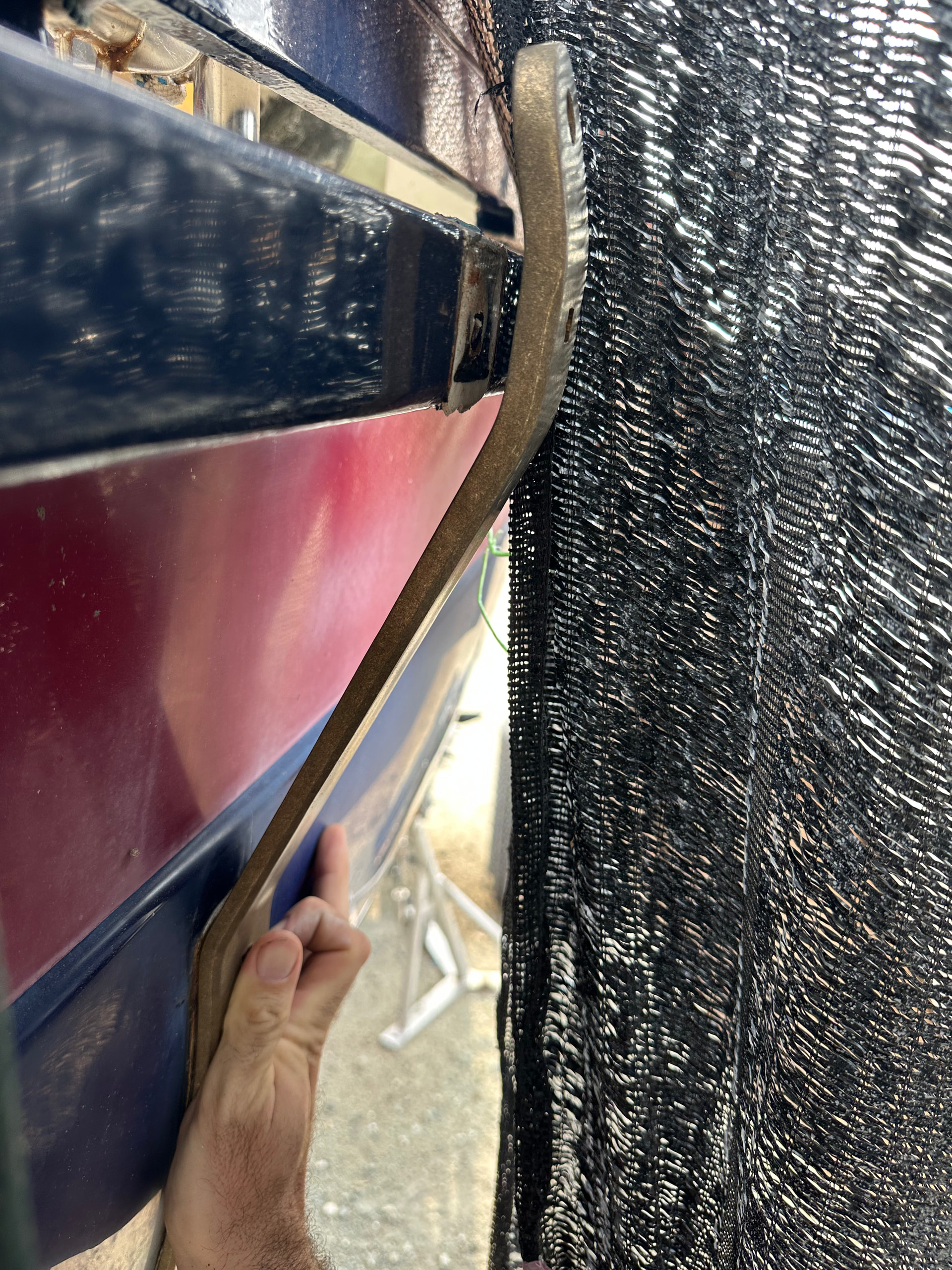
There is a new bobstay fitting too that looks like it would be bolted through the hull at the bow. Removing the current embedded one seems like a tricky job and not sure how I would match back the color of the blue gelcoat around it.

Regarding the number of bolts, the 6 longer ones you got (6") must be for the top of the shroud chainplates where they go through the mahogany rails. What are the 4 x 4" ones? Do you remember?

Concerning the bobstay fitting:

  1. removing the old. A dirty job using an angle grinder, chisel and hammer, dust mask, coveralls, a fan, and a long shower after the job.

It’s fairly easy when far for’ard in the forepeak to see where you have to cut to remove the GRP lay-up placed over the original Y-shaped bobstay plate. Mark. And then use a chisel and angle grinder to cut.

  1. I opted for a new Y-shaped internal plate I applied plenty of caulking/sealant to the new before inserting it. I judged that using a new Y-shaped internal plate was less disruptive than adding an external bobstay plate with bolts and backing plates.

Concerning the bolts.
For sure the six 6ā€ bolts are for the upper bolts holes of the shroud plates. That is the bolt that penetrates the channels (aka chain-wales), the part that protrudes further than the rub rail. The function of the channels with their extra 3.5ā€ (or so) protrusion is to get a much better angle for the shrouds than if the chainplates just went to the rub rail..

As for the four 4ā€ bolts, I do not remember.

If you put aside the six 6ā€ bolts for the moment, then you need another 48 carriage bolts, made up of (from stern to bow):
backstay plate/upper boomkin plate: 12 bolts
boomkin stay plates: 2 plates x 3 holes = 6 bolts
shroud plates 2 x 3 plates x 4 holes = 24 bolts
whisker stay plate 2 plates x 3 holes = 6 bolts

Somewhere I found those four 4ā€ bolts necessary. I no longer remember where!

If you choose stainless or duplex plates, the metal plates are inexpensive (with 316 ss very inexpensive). My metal supplier only charged me for the cut plates and the laser cut square holes.

Bending, polishing and electropolishing (most humans are addicted to flashy things so I went for mirror #8), welding (of the cranse iron and the backstay plate/boomking upper plate), and any minor rebends cost me the most. When doing the final attachment, I had to take one shroud plate back to my metal worker for a slight extra bend (I measured/estimated in mm just how much more bend had to made).

Special orders, meaning for me getting bolts made in duplex 2507, was the second biggest cost item. Polishing the caps of everyone of the 54 carriage bolts to mirror #8 took a lot of labour time and money.

If you are still contemplating titanium, I came across one factory (in an industrial estate right near Sungai Petani in Kedah) that works with titanium. When I visited them and talked to the boss, they were making vats out of titanium plate for a client. Lots of titanium plate that was to be scrapped and recycled. The workers, immigrant Viet Namese workers, specialised in making body adornments worn under the skin from the scrap titanium (if you’ve read Pigafetta’s story of Magellan’s voyage, those titanium adornments go where Magellan and Pigafetta noted that the Pilipinos put pearls). I did not find anyone in Malaysia that could supply titanium nuts and bolts, but I don’t know what is available now.

Plenty of places in Kedah or Pulau Pinang that can sell and work with 316 ss or duplex steel.

My best guess for now on why Zygote needed four 4ā€ carriage bolts is about internal furniture.

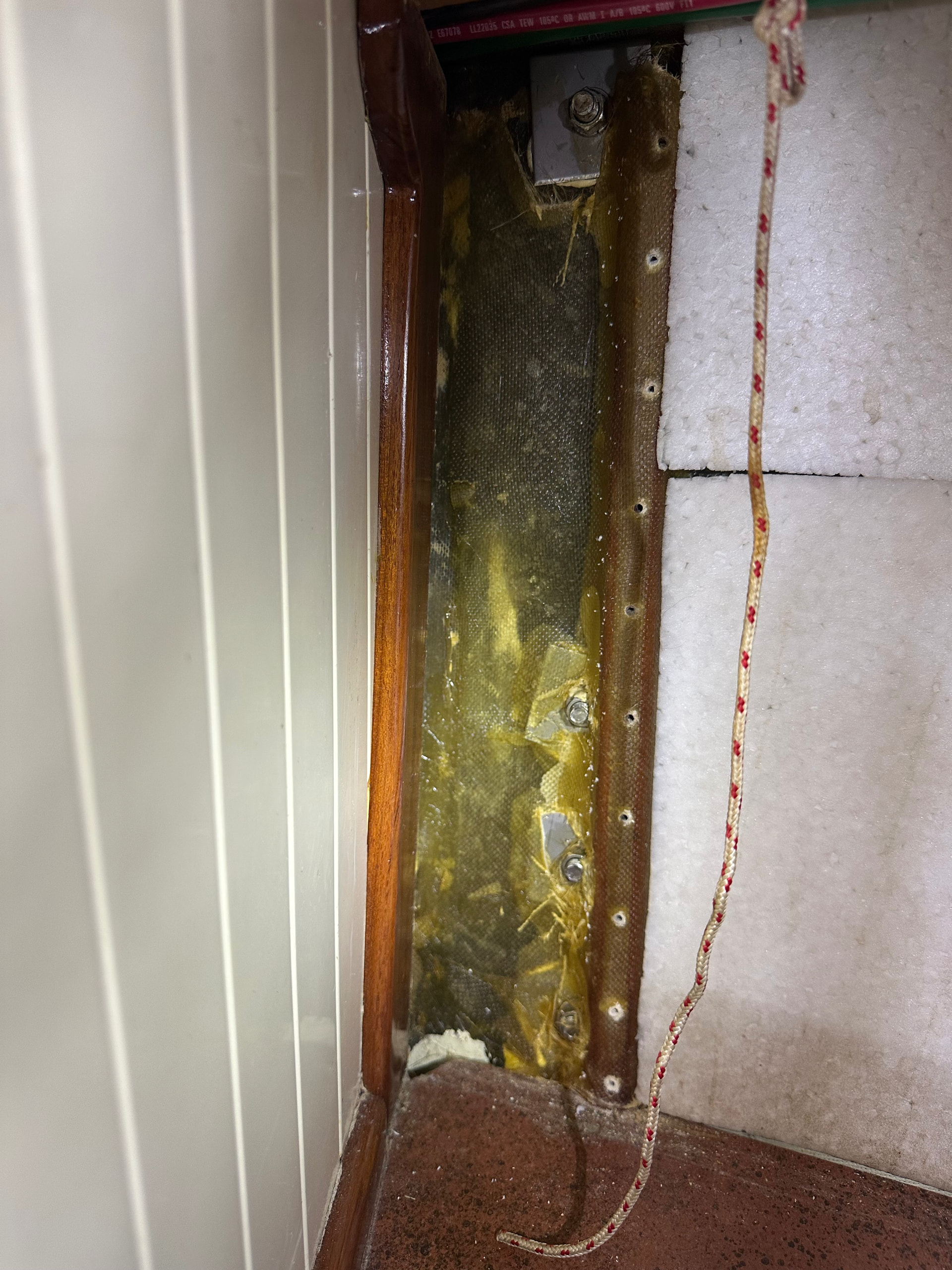
Meaning, for WW3, that I suggest you look in your forepeak (the focs’le, sailbin, chain locker) i particular and note how the carriage bolts terminate inboard.

Starting from the main cabin and on Starboard, Zygote has the standard liquor cabinet, then (in the forepeak for’ard of Bulkhead#3) she has a hanging locker and then shelves until reaching Bulkhead #2. Memory has it that in the hanging locker, acorn nuts cover the inboard end of the for’ardmost shroud chainplates (to protecting hanging clothes). I think Z also has acorn nuts on the inboard end of the carriage bolts that penetrate into the liquor cabinet.

On Port, moving for’ard from Bulkhead #3, Z has a workbench with lockers above filling the space until Bulkhead #2.

I have a memory of a couple three carriage bolts requiring painful acrobatics to tighten the nuts. The cook had the easy job of watching for caulking sealant to be squeezed out while I worked a socket wrench and or open spanner on the nuts.

Take care to keep all your backing plates when you remove your old chainplates and carriage bolts!

if I’ve been aboard WW3, I’ve forgotten her arrangement in the main cabin.

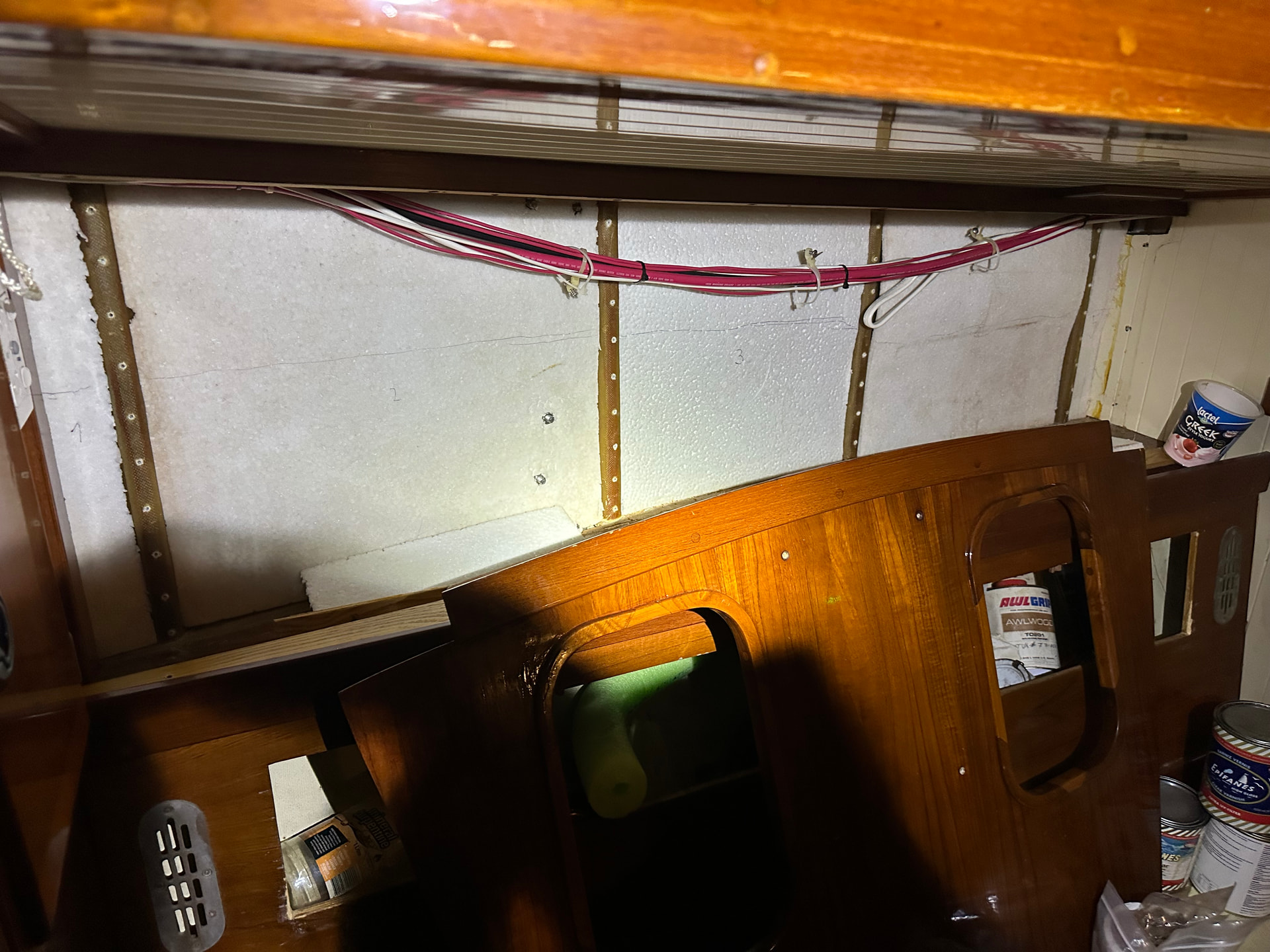
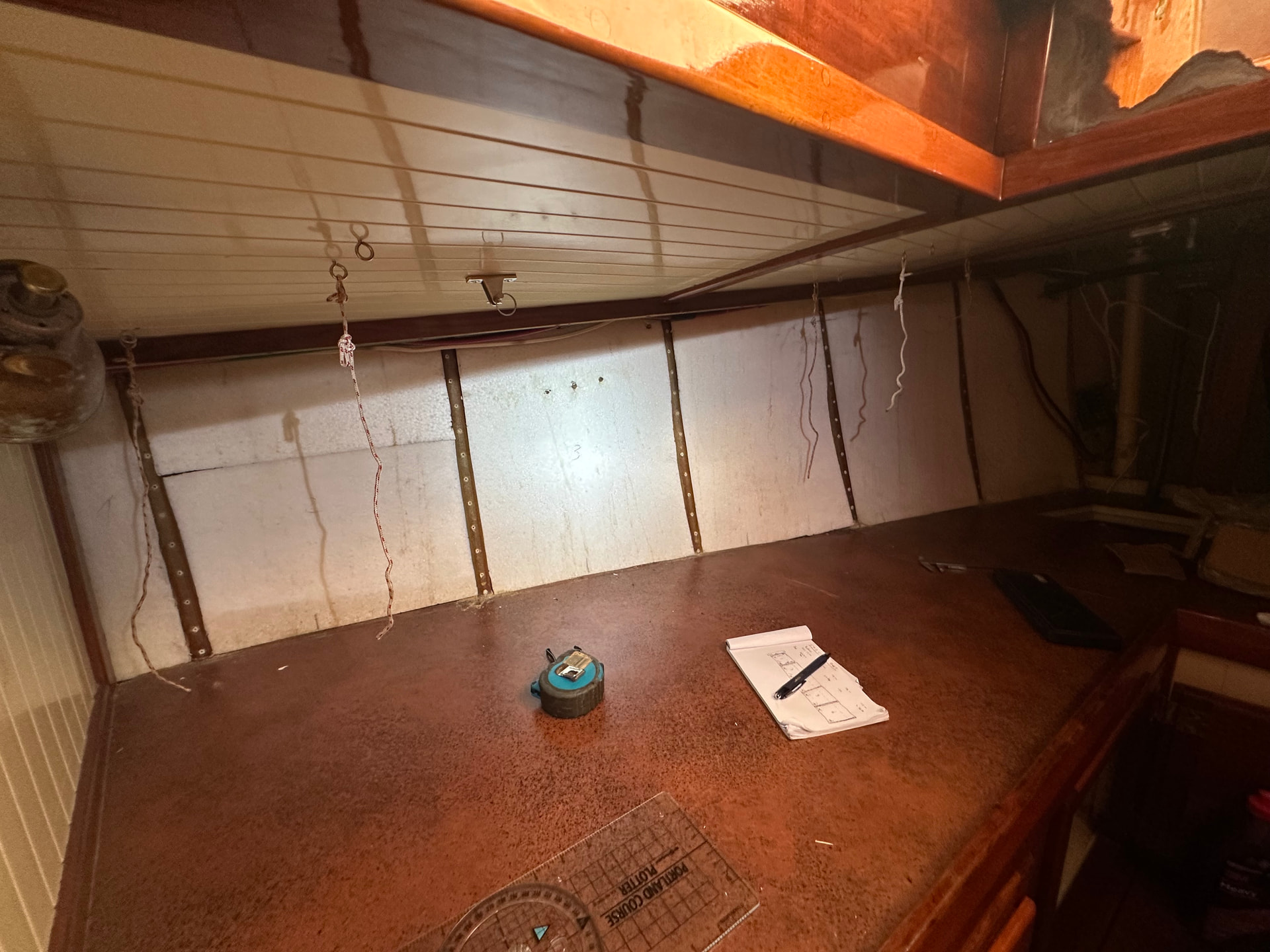
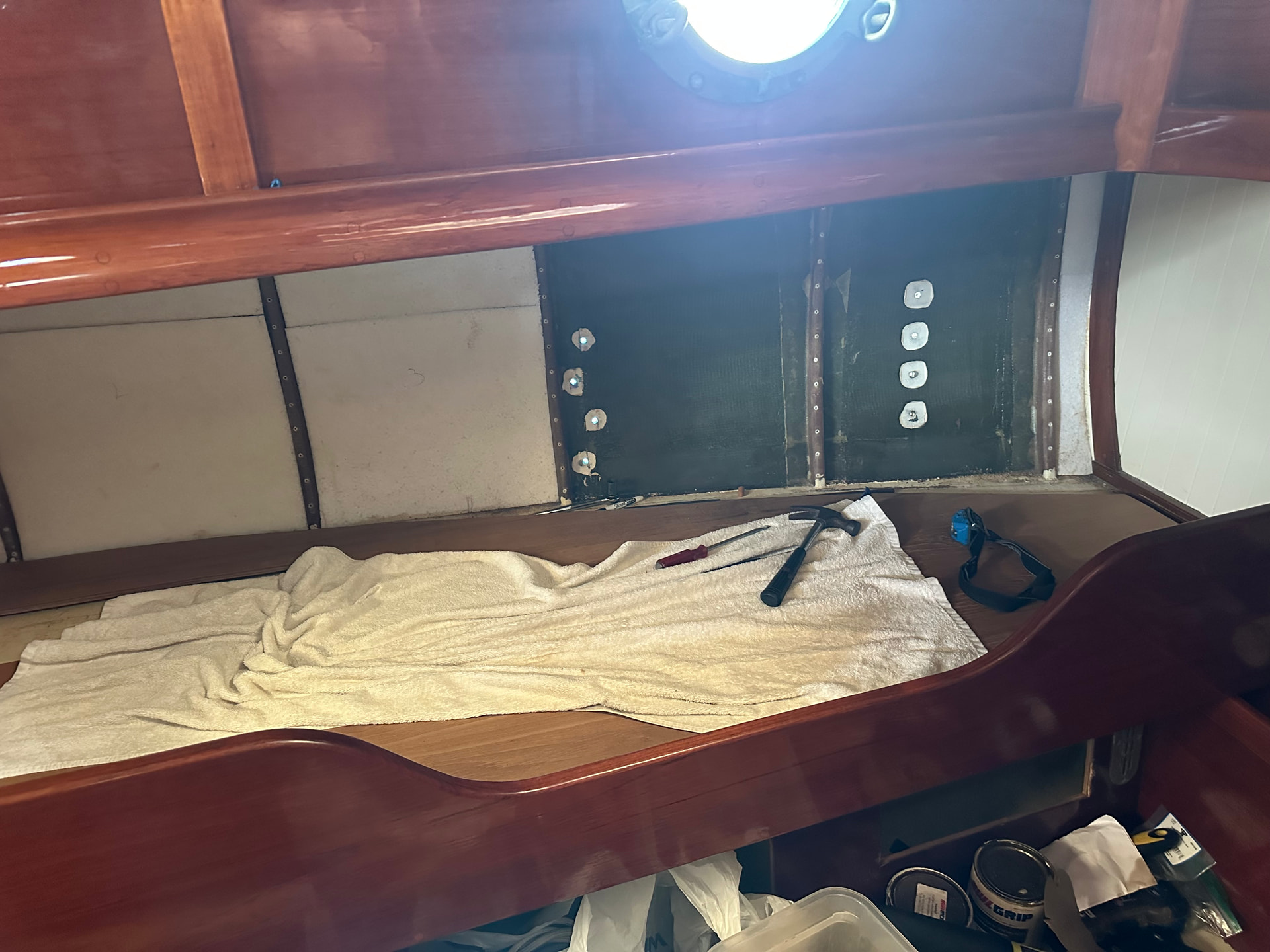
On Zygote, battens or ceiling strips trim both port and starb’rd sides. One of the arts of replacing chainplates is to remove the bare minimum number of battens necessary to access the inboard ends of the carriage bolts and the accompanying backing plate, washer, and nut.

If WW3 has a liquor cabinet, the carriage bolts visible inside it reveal the relative level of the other shroud chainplate carriage bolts. Once you have located the bolts on starb’rd, finding the relative level and identifying the battens to remove is a doddle.

If WW3 does not have a liquor cabinet, you likely need to locate the carriage bolts penetrating into the foc’s’le and then project that relative level back into the main cabin to identify the battens that need to be removed.

Don’t drop the backing plates.

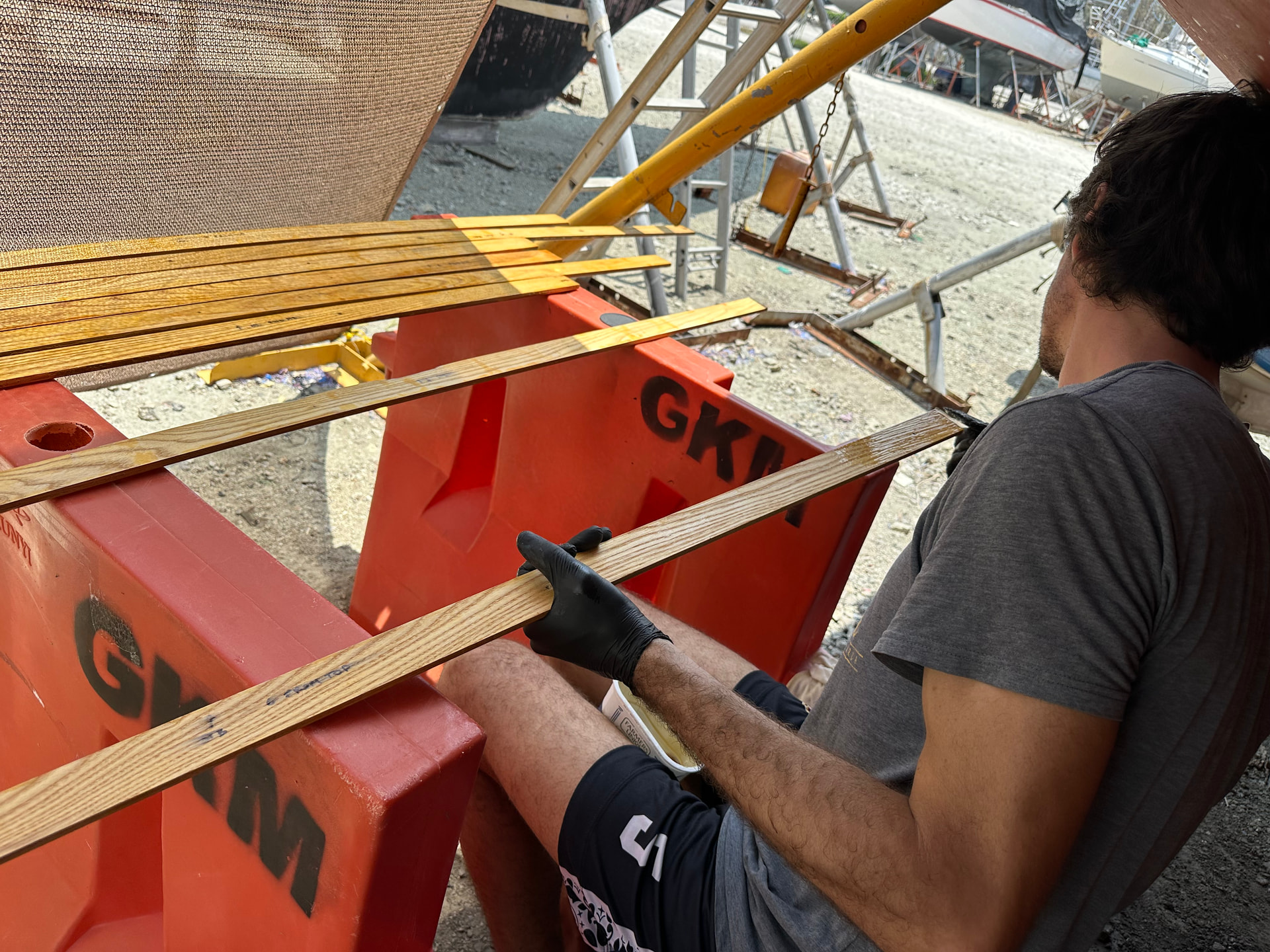
You could also just remove all the ceiling strips while you are at it. Number the backs of them as you take them off. Give them a wipe down with a maroon scruby and a fresh coat of varnish (on saw horses or such). Cleanup the hull behind the ceiling strips. Remove the rigid insulation panels. Scrub the FRP down with TSP solution. Fresh coat of paint on the FRP. I’d recommend replacing the loose factory insulation with self adhesive panels applied directly to the freshly painted FRP. I’d consider multiple layers of reflectix as an alternative - taping the perimeter of each panel to the hull. Eliminating the free movement of air on the hull-side of the panel will significantly improve the thermal efficiency.

Run a countersink bit on the outside of the hull on each of the holes for the chainplate bolts - creating a 1/16 - 1/8 bevel around each hole. This creates a sealant donut around the fastener help between the hull and the chainplate which will improve sealing efficiency.

Thanks a lot Bil and Jeremy for the inputs.

Interesting thought about the insulation too. I have been wondering if i should do something about it in anticipation for higher latitude sailing in Japan, possibly Alaska, that i would like to do in the not too distant future. I have mostly been in the tropics so far. White Wings used to be in the great lakes of Michigan, but only 6 months a year in the water. I see that there is some sort of thin foam insulation installed, and from you say Jeremy, that is standard. For those of you who are in colder climates, would you recommend replacing/upgrading that?